Escrocii folosesc metode tot mai sofisticate pentru a obține acces la telefon, conturi bancare și date personale.
Tipuri de fraude frecvente
- Apeluri și mesaje pe WhatsApp/Viber din partea „operatorilor de telefonie mobilă” – sub pretextul actualizării rețelei 5G, escrocii vă solicită partajarea ecranului și trimit fișiere malițioase cu denumirea operatorului sau cer datele necesare pentru logarea în aplicația bancară. - Promisiuni de investiții cu „profit garantat” – platforme fictive de investiții, acțiuni sau criptomonede inexistente. - Oferte online de sărbători sau pe marketplace-uri – plătiți, dar produsele nu ajung niciodată. - BEC Fraud (Business Email Compromise) – escrocii trimit emailuri false în numele partenerilor, modifică IBAN-ul în facturi și solicită plăți urgente.
Indiferent de metoda utilizată scopul final este același: obținerea datelor bancare și efectuarea de transferuri frauduloase din contul bancar al clienților.
OTP Bank Moldova avertizează clienții asupra unei noi metode de înșelătorie folosită de escroci. Persoane necunoscute, care pretind că sunt angajați ai unui operator de telefonie mobilă, contactează utilizatorii și le solicită să efectueze modificări în setările telefonului pentru a „trece la rețeaua 5G”.
În realitate, acest pretext ascunde o tentativă de infectare a dispozitivului: odată accesat, linkul furnizat poate instala automat un virus care compromite securitatea telefonului și oferă atacatorilor controlul acestuia.
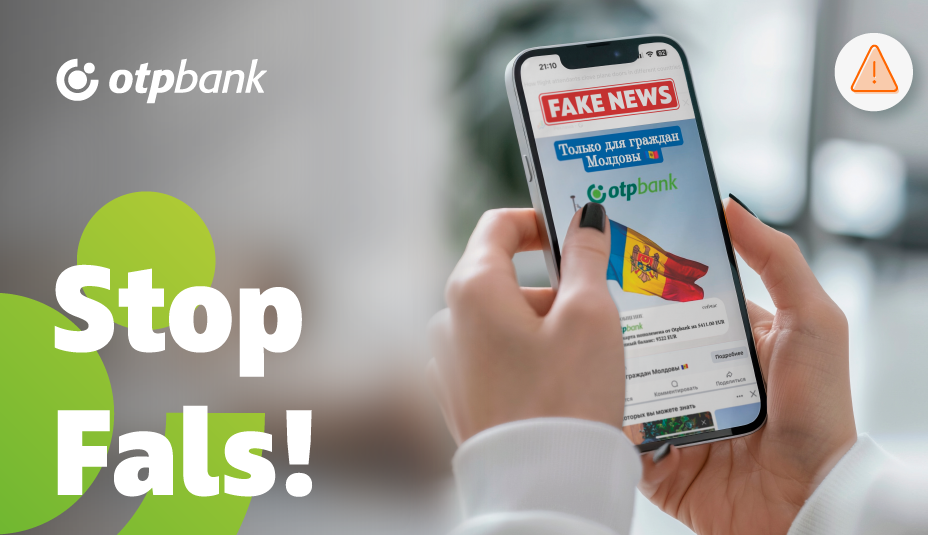
STOP FALS! Protejează-ți datele și evită capcanele online
Ai primit un e-mail care pare să fie de la OTP Bank și îți cere să actualizezi aplicația de Mobile Banking? Atenție! Este o tentativă de fraudă. Deși pentru unii utilizatori poate părea evident, aceste mesaje reușesc să păcălească mulți clienți, care ajung să ofere involuntar date personale. Iar aceasta poate duce la pierderi financiare.
Cum recunoști un mesaj fals?
Escrocii încearcă să te manipuleze folosind mesaje alarmante și logo-ul OTP Bank. Uite câteva semne clare că ai de-a face cu o tentativă de fraudă:
- Primești un e-mail sau SMS care îți cere să actualizezi aplicația de Mobile Banking. - Ți se solicită datele de autentificare, cum ar fi: numele de utilizator, parola, coduri de unică folosință sau datele cardului (număr integral, cod CVC/CVV). - Ești notificat că parola ta a fost modificată sau urmează să fie schimbată, deși nu ai solicitat asta. - Primești alerte despre tranzacții pe care nu le-ai făcut.
Ce trebuie să știi?
- OTP Bank nu solicită niciodată datele tale confidențiale prin telefon, e-mail, SMS sau alte canale. - Actualizarea aplicației de Mobile Banking este disponibilă doar prin canale sigure, precum Google Play sau App Store. - Dacă primești un e-mail suspect, ignoră-l și nu accesa linkurile sau atașamentele din el.
Fii vigilent la cele mai frecvente tipuri de fraudă cu investiții folosite de escroci, și descoperă mai jos câteva sfaturi utile de prevenire a acestora.
Frauda: investiții DEEPFAKE
Ce este? Un video falsificat cu ajutorul Inteligenței Artificiale (în care este adaptată vocea, mișcarea corpului și a feței), cu participarea persoanelor de încredere, precum: președintele statului, politicieni, miniștri ș.a., care oferă sfaturi financiare și recomandări de investiții cu profituri mari și riscuri minime, asigurând condiții simple de înscriere pentru orice cetățean.
De ce este important să fii informat? Video-urile sunt distribuite rapid pe rețelele de socializare, fiind vizionate de un număr mare de oameni, care pot cădea pradă și ”investi” în afacerea recomandată, riscând ulterior să piardă sume semnificative de bani.
Frauda: investiții cu profit “rapid și garantat”
Ce este? Un tip de fraudă care începe de obicei pe rețelele de socializare, prin care escrocii propun oferte profitabile de investiții în criptovalută, trading criptobursă, iar pentru a participa, necesită completarea unor chestionare online în care se solicită introducerea datelor personale, precum: nume/prenume, nr. de telefon, datele bancare, ș.a. Atât persoanele care au completat chestionarele, cât și cele care nu au completat*, sunt apelate de necunoscuți care se prezintă drept reprezentanții unei bănci, a unei companii de investiții sau trading, care le propun transferarea unor sume bănești, cu scopul de a începe procesul de trading și cumpărare a criptovalutei, sau rezervarea unui loc limitat în grupul investitorilor. * escrocii pot găsi numere de telefon în rețelele de socializare sau pe Darknet
De ce este important să fii informat? Procesul începe cu transferarea unor sume mici, ulterior fiind solicitate sume mai mari sub pretextul de a retrage profitul acumulat și suma investită, însă de fapt având drept scop efectuarea unui număr cât mai mare de transferuri.
Te atenționăm despre intensificarea fraudelor cu carduri bancare și te îndemnăm să tratezi cu suspiciune orice apel/mesaj prin care ți se solicită datele cardului, datele personale, parolele de securitate sau codurile de activare/înrolare primite prin SMS, fie prin intermediul rețelelor de socializare, serviciilor de mesagerie, site-urilor de comercializare a bunurilor sau apelurilor telefonice efectuate de către escroci în mod fraudulos, din numele băncii.
OTP Bank vine cu câteva recomandări pentru prevenirea fraudelor cu carduri bancare:
- fii prudent la apelurile telefonice de la numere necunoscute sau parvenite prin aplicații de mesagerie, precum și la mesajele primite prin email sau SMS; - nu comunica nimănui parolele de securitate recepționate prin SMS și parolele de acces în aplicațiile de mobile banking; - fii atent la reclamele cu prețuri mici si ofertele de investiții cu profit garantat; - evită accesarea link-urilor dubioase recepționate; - nu te înregistra pe diferite platforme dacă nu cunoști gradul de securitate a acestora; - acordă o atenție deosebită la conținuturile multimedia falsificate, deepfake-uri (conținut video sau audio falsificat cu ajutorul tehnologiilor de învățare profundă și inteligență artificială (IA)), pentru a evita răspândirea dezinformării sau a cădea victimă ale escrocilor; - consultă cu regularitate tranzacțiile efectuate, utilizând serviciul OTP Internet/Mobile Banking sau solicită serviciul OTP SMS Banking pentru alerte SMS în timp real.
TOP 10 sfaturi practice și utile pentru prevenirea fraudelor:
#1: Nu divulga nimănui:
- datele cardului tău bancar: data de expirare a cardului, codul CVV (compus din 3 cifre și amplasat pe spatele cardului), codul PIN sau soldul disponibil pe cont; - datele cu caracter personal (codul numeric personal din 13 cifre, data nașterii ș.a.); - parolele de securitate recepționate prin SMS (6 cifre) de la Bancă; - codurile de activare / înrolare pentru Google Pay sau Garmin Pay;
indiferent de canalele prin care acestea ți-au fost solicitate (rețele de socializare, servicii de mesagerie, site-uri de comercializare a bunurilor sau apeluri telefonice)
#2: Verifică cu atenție informațiile din mesaje înainte de a reacționa;
#3: Evită să accesezi link-urile dubioase recepționate;
#4: Nu te înregistra pe diferite platforme dacă nu cunoști gradul de securitate a acestora;
#5: Tratează cu suspiciune reclamele cu prețuri mici, premii bănești sau ”Oferte bombă”, până nu te asiguri de veridicitatea informației și a sursei care a publicat-o;
#6: Nu accepta instalarea aplicațiilor de tip remote, precum și accesarea telefonului prin aceste aplicații (Anydesk, TeamViewer, altele);
#7: Nu transmite cardul persoanelor terțe, nu lăsa cardul bancar la vedere și nu permite fotografierea sau copierea datelor cardului de către persoane străine;
#8: Păstrează cardul într-un loc sigur, nu indica datele acestuia pe diferite link-uri recepționate și nu salva datele cardului în memoria dispozitivului;
#9: Consultă cu regularitate tranzacțiile efectuate, utilizând serviciulOTP Internet/Mobile Bankingsau solicită serviciul OTP SMS Bankingpentru alerte SMS în timp real.
#10: Dacă ai divulgat datele cardului sau parolele de unică folosință, contactează OTP Bank la 022 256 456 și solicită blocarea acestuia.
Vă avertizăm despre noi metode de fraudă apărute în mediul online, cu utilizarea nelegitimă a logo-ului OTP Bank! Vă rugăm să fiți vigilenți și să tratați cu suspiciune orice mesaj de genul „Oferte bombă” sau „oferte bune” sau „oferte doar pentru deținătorii de carduri OTP Bank”, prin care escrocii încearcă să va ademenească și să vă implice în scheme frauduloase.
Cum funcționează:posesorii cardurilor emise de OTP Bank sunt invitați să ofere unele date de card prin chat sau mesagerie, pentru a primi careva transferuri bănești prin platformele unor comercianți frauduloși, pe care ulterior conform schemei de fraudă, urmează să le transfere către alte persoane, în schimbul unor câștiguri ușoare și atrăgătoare.
Care sunt riscurile: aceste acțiuni pot atrage după sine nu doar pierderi financiare, dar și răspundere penală pentru implicare în scheme de fraudă.
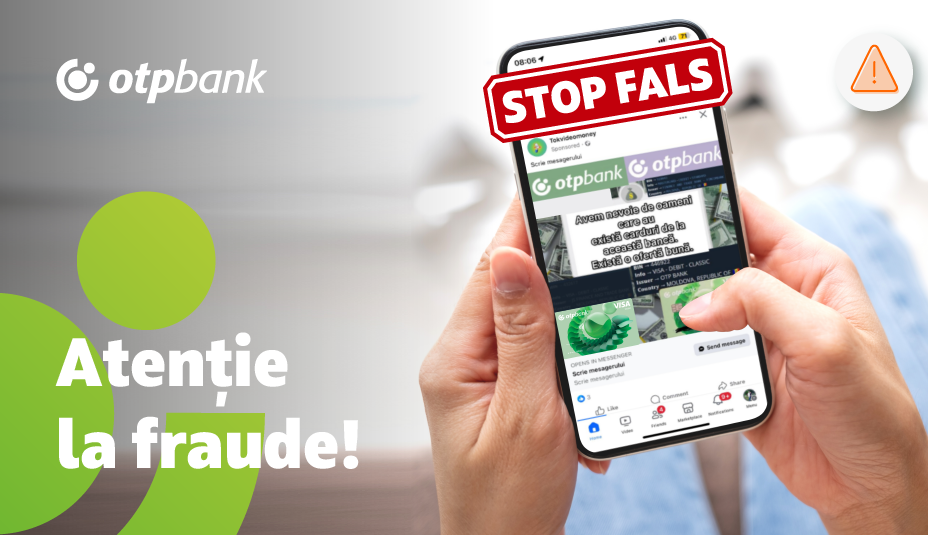
Imagini false cu logo-ul OTP Bank au apărut pe rețele de socializare, ademenind utilizatorii să participe la tombole, sondaje plătite sau să se înregistreze pe diferite platforme necunoscute. Folosind promisiunea de câștig, utilizatorii sunt de fapt invitați să acceseze link-uri frauduloase, unde li se solicită să introducă date confidențiale. Prin această metodă de fraudă, escrocii colectează datele personale sau de card, pentru a sustrage ulterior mijloacele bănești de pe conturi.
Atenție la fraude!
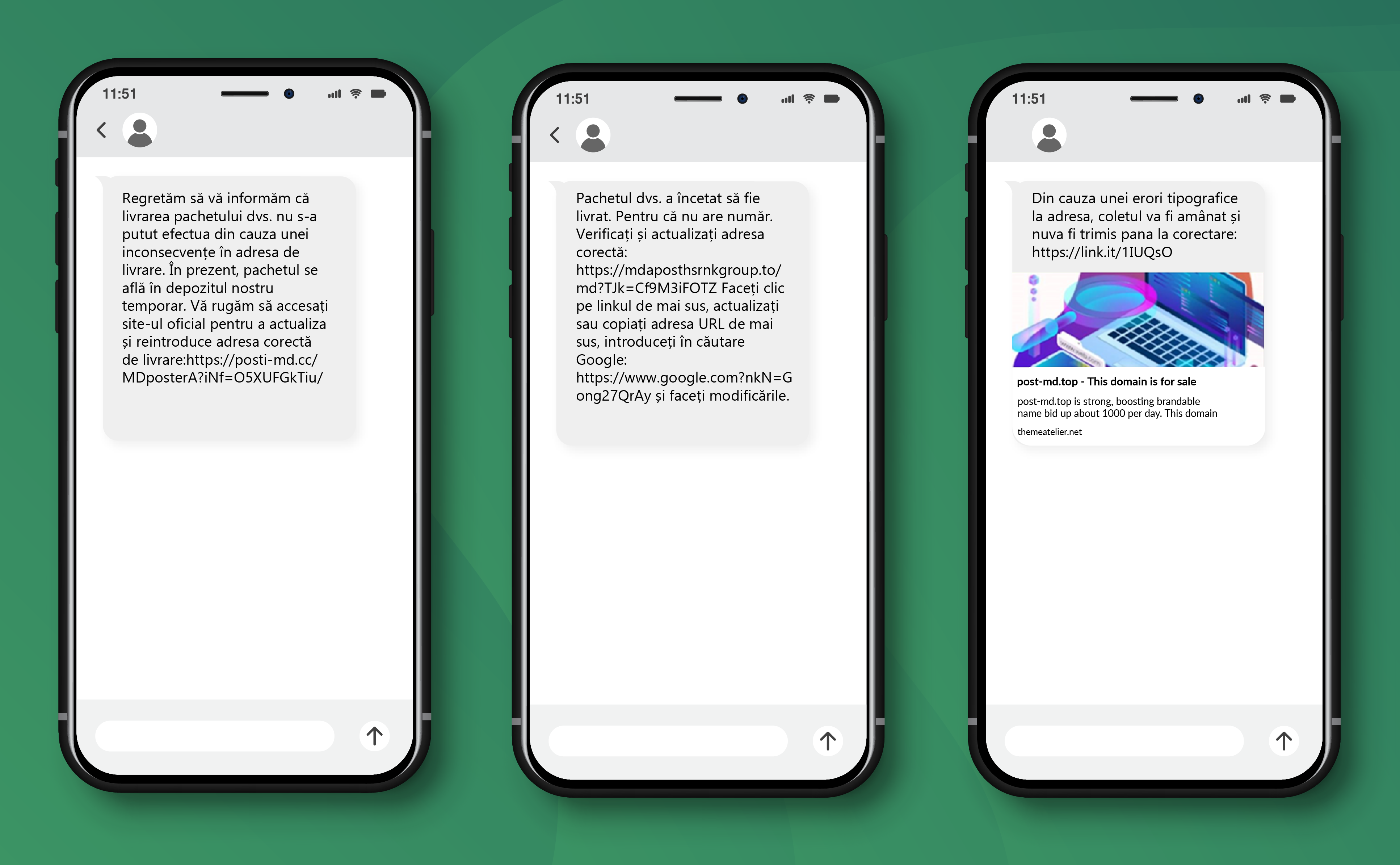
Mesaje „Actualizarea/corectarea adresei de livrare a coletului”
În contextul unei creșteri semnificative a tentativelor de escrocherii prin intermediul serviciilor de curierat, este bine să cunoști care sunt riscurile potențiale și să manifești prudență maximă față de mesaje frauduloase.
- Escrocii trimit mesaje frauduloase aleator. Scopul lor este să ajungă la cât mai multe persoane sau numere de telefon, printre care poți fi și tu.
Prin aceste mesaje ei solicită corectarea adresei de livrare a coletului, sub pretextul că, în caz contrar, acesta nu va mai fi livrat. În realitate escrocii nu dețin informații despre cine este în așteptarea unui colet, dar manipulează cu acest gen de mesaje, pentru a provoca interes.
Recomandarea #1: Verifică cu atenție informațiile din mesaj și, înainte de a reacționa, solicită detalii de la compania responsabilă de livrarea coletului (dacă ești în așteptarea unei livrări).
- În mesaj se solicită să accesați un link pentru a putea corecta datele de livrare.
La accesarea linkului vei fi direcționat, de cele mai deseori, către un site-clonă al site-ului de livrare POȘTA MOLDOVEI sau NOVA POSHTA. Aici ți se va cere să introduci datele cardului bancar și să plătești o taxă simbolică (sumă mică, de exemplu 5 lei) pentru corectarea adresei și livrarea ulterioară a coletului.
Recomandarea #2: Evită să accesezi link-urile dubioase primite și să completezi datele cardului solicitate. La accesarea acestor link-uri/adrese, escrocii vizualizează în timp real datele completate de tine astfel obținând informațile de pe card și parola de securitate. Având aceste date, escrocii pot utiliza banii tăi foarte ușor.
Recomandarea #3: Nu divulga nimănui datele cardului tău bancar (data de expirare a cardului, codul CVV (din 3 cifre, din spatele cardului), soldul disponibil pe cont și parolele de securitate recepționate prin SMS (6 cifre) de la Bancă.
- După completarea datelor solicitate, se va afișa o eroare
Scopul escrocilor este de a compromite datele cardului tău, iar dacă le divulgi și parola de înrolare a cardului în Google Pay sau Garmin Pay (portofel digital), pe care o primești prin SMS de la Bancă, aceștia pot să le utilizeze pentru a efectua tranzacții frauduloase.
Recomandare #4: NU COMUNICA nimănui codurile de activare/înrolare pentru Google Pay sau Garmin Pay.
Recomandare #5: Dacă ai divulgat datele cardului sau parolele de unică folosință, contactează OTP Bank la +37322256456 și solicită blocarea acestuia.
Vă atenționăm despre intensificarea fraudelor cu carduri bancare și vă îndemânăm să tratați cu suspiciune orice apel/mesaj prin care vi se solicită datele cardului, datele personale sau parole de securitate, fie prin intermediul rețelelor de socializare, serviciilor de mesagerie, site-urilor de comercializare a bunurilor sau apelurilor telefonice efectuate de către escroci în mod fraudulos, din numele băncii.
Banca NU solicită niciodată și sub nici o formă datele confidențiale ale cardului bancar sau datele personale.
Consultați cu regularitate tranzacțiile efectuate, utilizând serviciul OTP Internet/Mobile Banking sau solicitați serviciul OTP SMS Banking pentru alerte SMS în timp real.
Te atenționăm despre intensificarea cazurilor de fraudă cu carduri bancare! Află pașii pe care îi parcurg escrocii, pentru a ști cum să procedezi ca să nu fii victima înșelătorilor.
1. Escrocii te vor contacta prin WhatsApp, Telegram sau Viber
Numărul tău de telefon este afișat în anunțurile de pe www.999.md, www.makler.md etc. și poate fi găsit ușor. Escrocii te vor contacta direct și vor întreba dacă produsul mai este disponibil. Pentru că sunt cetățeni străini și folosesc instrumente de traducere, vei observa greșeli gramaticale și de exprimare, iar unii dintre ei vor începe conversația în limba rusă. Escrocii vor insista asupra unei metode de livrare, iar plata comenzii prin transfer la card.
Sfat #1: Nu divulga nimănui informație despre tine sau despre cardul tău bancar!
2. Îți vor transmite un link pentru plată
Linkul te va direcționa către un site-clonă al site-ului de livrare POȘTA MOLDOVEI sau NOVA POSHTA. Aici ți se va cere să introduci datele cardului bancar.
Important! Dacă trebuie să primești bani, NU trebuie să furnizezi informație despre: data de expirare a cardului, codul CVV (din 3 cifre, din spatele cardului) soldul disponibil pe cont și parolele de securitate recepționate prin SMS.
Persoana care efectuează transferul are nevoie doar de numărul de card (indiferent de țara de proveniență sau destinatară). Dacă introduci date adiționale, banii tăi pot fi furați!
Sfat #2: Nu accesa link-urile din mesaje și nu completa datele solicitate despre card. Datorită accesării link-urilor, escrocii pot obține datele cardului, parolele de securitate și informația despre soldul disponibil la cont. Cu aceste date, escrocii pot retrage foarte ușor banii de pe card.
3. Vor insista să introduci datele solicitate
Escrocii vor face presiuni asupra ta, pentru a te face să oferi datele mai repede. În acest moment ar trebui să pui capăt conversației și să raportezi frauda. În sesizarea ta către OTP Bank, poți include o captură de ecran cu conversația voastră, numărul persoanei și linkul care ți l-a transmis, iar OTP Bank va avea grijă de securitatea cardului tău.
Sfat #3: Dacă ai divulgat datele cardului, contactează OTP Bank la 022-256-456 și solicită blocarea cardului.
Pentru a te proteja, abonează-te la serviciul SMS banking și OTP Internet/Mobile banking pentru a fi la curent cu starea contului și a monitoriza orice tranzacție.
OTP Bank îți dorește sărbători luminate și în siguranță alături de cei dragi!
ATENȚIE!
Fraude prin link-uri false Nova Poshta și apeluri de la „presupuși” angajați ai băncii
Stimați clienți, Vă atenționăm despre intensificarea cazurilor de fraudă efectuate prin link-uri false Nova Poshta, precum și prin apelarea clienților de către “presupuși” angajați ai băncii.
Link-uri false Nova Poshta
Escrocii iau legătura cu deținătorii de card prin intermediul anunțurilor de comercializare a bunurilor plasate de aceștia pe site-uri ca www.999.md, www.makler.md ș.a, și solicită livrarea bunului prin intermediul Nova Poshta sau a altui serviciu de curierat. Ulterior, expediază un link ce direcționează persoana către site-ul clonă Nova Poshta, solicitând completarea informațiilor de pe card (număr card, CVV/CVC, data expirării), parole de securitate recepționate prin SMS, soldul disponibil pe cont etc. Drept urmare a accesării link-ului, infractorii obțin accesulîn timp real la vizualizarea datelor care sunt completate și retrag banii de pe card prin transfer P2P sau prin alte plăți în mediul on-line.
Apeluri de la “presupuși” angajați ai băncii
Escrocii apelează pe numărul de telefon mobil sau Viber/WhatsApp, prezentându-se drept angajați ai băncii, sub pretextul că de pe card s-a efectuat un transfer către Kazahstan (sau altă țară) , solicitând de urgență datele cardului și parole de securitate, pentru a-l bloca. Totodată, aceștia solicită informația despre soldul disponibil pe cont, pentru ca ulterior cu datele de card care au fost oferite, să retragă banii prin transfer P2P sau prin intermediul achitărilor în mediul on-line.
Noi tentative de fraudă în mediul online
Au fost semnalizate noi tentative de fraudă în mediul online. Pentru a preveni astfel de tentative, vă rugăm repetat să fiți vigilenți la orice apel/mesaj prin care vi se solicită date personale sau de card, atât prin intermediul rețelelor de socializare, apelurilor telefonice, cât și a site-urilor de comercializare a bunurilor.
Cele mai recente fraude, la care trebuie să fii atent
1. Tombole fictive, organizate de o pagină-clonă OTP Bank
Pagina fictivă OTP Bank comentează la publicațiile paginilor din grupul OTP, pe rețelele de socializare. Pretextul ar fi că OTP Bank ofertă o sumă grandioasă, celor care participă în tombolă.
Te îndemnăm să nu dai curs acestei fraude, așa cum OTP Bank nu organizează niciodată astfel de tombole.
Nu clica link-ul din comentarii, iar dacă ai făcut-o, nu fă nimic altceva;
Închide pagina, curăță cache-ul din browser și restartează calculatorul.
1. Apeluri sau mesaje primite de la "potențiali cumpărători"
Fraudele de acest tip au loc pe site-uri ca www.999.md, www.makler.md, www.olx.ro ș.a.
Infractorii te contactează direct și sub pretextul că nu se pot întâlni cu tine pentru a lua bunul procurat, îți propun să îl transmiți utilizând serviciile poștale (de exemplu Poșta Moldovei). De asemenea, sub pretextul că ar fi mai comod pentru tine, infractorii propun să-ți plătească bunul în avans, iar pentru asta cer datele cardului tău.
Te îndemnăm să nu oferi nimănui și sub niciun pretext informația despre cardul/cardurile tăle bancare!
2. Site-uri fictive unde poți comanda online
E posibil să observi site-uri asemănătoare cu cele cunoscute de tine, unde poți comanda livrare de bucate online, servicii de catering, pizza. Trebuie să fii atent, deoarece la aceste site-uri este parțial modificată adresa web.
La efectuarea comenzii, după ce adaugi datele cardului și codul de securitate primit prin SMS, de pe cardul tău sunt extrași bani și această comandă nu va fi niciodată livrată.
Cazurile de fraudă devin din ce în ce mai frecvente și mai sofisticate, dar grija pentru siguranța ta rămâne prioritatea noastră. De aceea, suntem alături de tine cu informații clare, soluții utile și pași concreți pentru a-ți proteja banii și datele.
Aici găsești tot ce trebuie să știi despre cum să recunoști fraudele, cum să te protejezi și ce să faci dacă ceva nu este în regulă. Pentru că siguranța ta nu e doar responsabilitatea ta - este și responsabilitatea noastră.
Descoperă în lista de mai jos cum recunoști tipurile de fraudă
Deepfake - video-uri falsificate
Investiții false
Frauda: Romance
Livrarea coletului
Site-uri de comercializare a bunurilor
Furtul de identitate
Cărăușii de bani
Fraudă: Accidentul
Frauda: Moștenirea
Fraudă: Creditul
Vishing
Smishing
Phishing
Card Skimming
Email Spoofing
Frauda: Tombole și oferte fictive
BEC Fraud
CEO Fraud
Telecom Vishing
Compromiterea contului de social media
Ce reprezintă frauda Deepfake cu video-uri falsificate?
Deepfake-urile sunt videoclipuri sau înregistrări audio realizate cu ajutorul inteligenței artificiale (AI), care imită perfect vocea, chipul și gesturile unei persoane cunoscute.
Cum funcționează?
- Escrocii creează materiale media convingătoare în care persoane publice, lideri sau rude apropiate recomandă investiții sau cer ajutor financiar. - Videoclipurile sunt bine realizate – cu imagine și sunet de calitate, limbaj persuasiv și distribuție masivă pe rețele sociale. - Uneori, vocea pare a fi chiar a șefului de la serviciu sau a unei rude apropiate. - Scopul este să te convingă să accesezi link-uri frauduloase, să transmiți date confidențiale sau chiar să transferi bani în conturile escrocilor.
Cum te protejezi?
- Nu crede orbește ce vezi online, oricât de autentic ar părea. - Fii atent la detalii: clipiri nesincronizate, mișcări rigide ale feței, voce robotică, sunet decalibrat față de buze. - Confirmă direct cu persoana în cauză dacă ai primit o solicitare audio/video suspectă. - Nu accesa link-uri necunoscute și nu completa date confidențiale.
Ce reprezintă frauda cu investiții false - „profit rapid și garantat”?
Este o schemă prin care escrocii încearcă să te convingă să investești bani în afaceri fictive, promițându-ți câștiguri mari și rapide, fără riscuri.
Cum funcționează?
- Escrocii promovează „investiții sigure” pe rețele sociale (Facebook, Telegram etc.), de obicei în criptomonede sau platforme de trading. - Ești rugat(ă) să completezi un formular cu date personale și bancare. - Primești un apel de la un „broker” sau „specialist” care te convinge să investești o sumă mică, apoi să continui cu sume tot mai mari. - Ți se cere să instalezi aplicații, să accesezi linkuri sau să trimiți copii ale actelor. - Soldurile „câștigate” sunt fictive – escrocii doar simulează profitul pentru a te încuraja să investești mai mult. - Banii ajung la „cărăuși de bani” care îi retrag și îi transferă mai departe, pierzându-se urma acestora.
Cum te protejezi?
- Tratează cu scepticism ofertele care promit îmbogățire rapidă. - Nu completa chestionare cu date personale sau bancare. - Nu accepta să instalezi aplicații de acces la distanță - Programe precum AnyDesk sau TeamViewer permit controlul de la distanță asupra dispozitivului dumneavoastră. - Sub presiune psihologică, escrocii vă pot manipula să le oferiți acces, ceea ce le permite să fure date personale sau financiare. - Nu oferiți niciodată acces la calculator sau telefon unor persoane necunoscute. - Evită instalarea aplicațiilor la indicația unor persoane necunoscute - Escrocii pot recomanda aplicații de trading precum MetaTrader 5, FX Pro sau altele similare. - Prin aceste aplicații, ei pot simula câștiguri inexistente pentru a vă convinge să investiți bani. - Refuză să trimiți copii ale actelor sau să divulgi parole. - Nu efectua tranzacții la ghidajul cuiva prin telefon.
Ce reprezintă frauda Romance?
Este un tip de fraudă emoțională prin care escrocii îți câștigă încrederea într-o relație online, doar pentru a obține bani sau date confidențiale.
Cum funcționează?
- Ești contactat pe rețele sociale, WhatsApp, Messenger, Viber ș.a. - Comunicarea devine tot mai personală, iar încrederea se construiește în timp – uneori săptămâni sau chiar luni. - După ce se creează o legătură emoțională, escrocul îți cere bani sau date bancare sub pretextul unei situații urgente: boală, accident, probleme financiare sau ajutor pentru o cauză umanitară. - Solicitările devin din ce în ce mai frecvente și sumele cresc progresiv. - În unele cazuri, victimele ajung să transfere bani altor victime, fără să știe că sunt implicate într-o schemă de fraudă.
Cum te protejezi?
- Verifică identitatea persoanelor cu care intri în contact online solicitând informații suplimentare sau verificând informațiile din profil. - Nu divulga date cu caracter personal, datele bancare sau financiare persoanelor necunoscute. - Tratează cu scepticism solicitările urgente de bani și fii atent la scuzele de a evita întâlnirea în realitate. - Utilizează cu prudență platformele online de socializare și evită dezvăluirea informațiilor personale
Ce reprezintă frauda cu livrarea coletului?
O fraudă frecventă prin care primești un SMS sau mesaj cu un link pentru „corectarea adresei de livrare a coletului”.
Cum funcționează?
- Mesajul conține un link care duce către un site fals ce imită Poșta Moldovei, Nova Poshta etc. - Ți se cere să introduci datele cardului și să achiți o „taxă” simbolică (ex: 5 lei). - După introducerea datelor, apare o „eroare”, iar datele deja sunt compromise. - Dacă ai introdus și parola de înrolare a cardului în Apple Pay, Google Pay sau Garmin Pay primit prin SMS de la Bancă, escrocii pot folosi cardul tău pentru a efectua tranzacții frauduloase.
Cum te protejezi?
- Nu accesa link-uri din mesaje suspecte și nu completa datele cardului pe site-uri necunoscute sau neverificate. - Nu divulga nimănui datele cardului tău bancar (data de expirare a cardului, codul CVV, soldul disponibil pe cont și parolele de securitate recepționate prin SMS de la Bancă), și codurile de activare/înrolare pentru Google Pay sau Garmin Pay. - Solicită detalii de la compania de curierat, în cazul în care într-adevăr aștepți un colet.
Ce reprezintă frauda cu site-uri de comercializare a bunurilor?
Este o metodă de fraudă prin care escrocii se dau drept cumpărători interesați de produsele tale postate pe site-uri de anunțuri.
Cum funcționează?
- După ce publici un anunț pe platforme precum 999.md sau makler.md, ești contactat prin mesaj pe WhatsApp, Viber sau Telegram de persoane care pretind că doresc să cumpere produsul. - Persoana propune o „metodă sigură de livrare” și trimite un link care duce către un site fals ce imită Poșta Moldovei, Nova Poshta, în care cere să completezi datele cardului bancar. - După ce introduci datele, escrocii folosesc aceste informații pentru a retrage banii de pe card. - Aceștia pot insista sau presa să introduci datele „cât mai repede”.
Cum te protejezi?
- Nu divulga nimănui datele tale personale și a cardului tău bancar - Nu accesa link-uri primite de la persoane necunoscute și nu introdu datele cardului. - Încheie conversația imediat dacă observi ceva suspect.
Ce reprezintă frauda cu furtul de identitate?
Este o formă de fraudă prin care cineva obține și folosește datele tale personale fără acordul tău, pentru a accesa resurse financiare, a deschide conturi sau a contracta servicii în numele tău.
Cum funcționează?
- Datele tale pot fi colectate de pe rețele sociale, din aplicații nesigure sau formulare online false. - Aceste date pot fi utilizate pentru a crea profiluri false, a comite fraude în mediul online sau pentru a obține acces la alte informații sensibile.
Cum te protejezi?
- Verifică dacă website-ul este securizat înainte de a introduce datele personale. - Evită să publici prea multe date personale online și verifică periodic setările de confidențialitate. - Activează autentificarea în doi pași pe conturile online. - Setează parole complexe și diferite pentru fiecare cont.
Ce reprezintă frauda cu Cărăușii de bani?
Persoanele care transferă bani obținuți în mod ilegal către alte persoane și în alte conturi, în schimbul unui comision, cu intenția de a pierde urma beneficiarului real.
Cum funcționează?
- Primești o ofertă de „job online” prin rețele sociale sau email. - Ți se cere să deschizi un cont bancar sau să folosești contul propriu pentru a primi și retrimite bani. - Sumele provin din fraude, iar tu devii intermediarul (cărăușul), primind un comision.
Cum te protejezi?
- Nu deschide conturi bancare pentru persoane necunoscute. - Refuză orice ofertă care implică primirea și transferul de bani, și nu răspunde mesajelor sau apelurilor în care ți se promite o sumă de bani pentru tranzacțiile în numele altor persoane.
Ce reprezintă frauda cu accidentul?
Este o metodă de manipulare prin care ești apelat de o persoană care pretinde că un membru al familiei tale a avut un accident și are nevoie urgentă de bani.
Cum funcționează?
- Escrocii sună de pe numere necunoscute folosind Caller ID spoofing sau telefonie IP, pentru a falsifica numărul afișat și a părea legitim, prezentându-se drept polițiști, avocați sau medici și comunică despre faptul că o rudă apropiată este implicată într-un accident grav și trebuie „ajutată” de urgență. - Ți se cere să transferi bani într-un cont sau să-i înmânezi unui intermediar. - Presiunea emoțională este mare, iar apelul este urgent și alarmist.
Cum te protejezi?
- Închide imediat apelul și contactează ruda în cauză. - Nu transfera bani și nu oferi informații personale sau financiare. - Anunță imediat Poliția.
Ce reprezintă frauda cu moștenirea?
Este un tip de scam prin care primești un email în care ți se spune că ești moștenitorul unei averi uriașe, dar pentru a o obține trebuie să plătești o „taxă”.
Cum funcționează?
- Mesajul vine de la un pretins avocat. - Povestea sună credibil: un milionar decedat, fără rude, cu același nume de familie. - Ți se cere să efectuezi un transfer spre o destinație necunoscută: „comision pentru a putea primi moștenirea”. - După ce trimiți banii, persoana dispare, iar moștenirea nu există.
Cum te protejezi?
- Verifică identitatea persoanelor cu care intri în contact online solicitând informații suplimentare sau verificând informațiile din profil. - Nu divulga date cu caracter personal, datele bancare sau financiare persoanelor necunoscute. - Tratează cu scepticism mesajele cu promisiuni exagerate și nu trimite bani pentru „moșteniri” de la necunoscuți. - Raportează schema de fraudă precum și eventualele dubii cu privire la autenticitatea unei persoane online către autorități, pentru a contribui la identificarea infractorilor.
Ce reprezintă frauda cu creditul?
Este o schemă prin care ți se promite un credit rapid și accesibil, dar ți se cere să plătești „taxe” în avans, fără ca împrumutul să existe în realitate.
Cum funcționează?
- Ești contactat prin email sau rețele de socializare și ți se oferă un credit, fără verificare de bonitate, și ți se cere să plătești în avans comisioane în scopul acoperirii „costurilor administrative” ale cererii de împrumut. - De fapt, în spatele acestor „împrumuturi” nu există instituții financiare. Sumele sunt trimise în mai multe conturi diferite, iar după plată, fraudatorii dispar.
Cum te protejezi?
- Fii prudent la ofertele de credit atractive, care solicită minim infomații și documente - Verifică identitatea și reputația companiei înainte de a accepta orice ofertă. - Fă o pauză și analizează situația înainte de a transfera sume de bani.
Ce reprezintă Vighing-ul?
Vishing (voice phishing) este o tentativă de fraudă prin telefon. Escrocii sună și se prezintă drept angajați ai unei bănci sau ai operatorului de telefonie mobilă, pentru a obține date confidențiale sau a te convinge să faci un transfer.
Cum funcționează?
- Primești un apel aparent legitim, de pe un număr care seamănă cu cel al unui Call Centru. - Escrocii se prezintă drept angajații băncii, spun că s-a făcut o tranzacție suspectă de pe contul tău și că trebuie „să salvezi banii” transferându-i într-un cont „sigur”. - Îți cer datele cardului, parolele de securitate și detaliile despre soldul disponibil pentru a bloca transferul. - În cazul în care primesc datele de card și parolele de securitate solicitate, banii sunt retrași din cont prin transfer P2P sau prin achitări online.
Cum te protejezi?
- Banca nu va solicita niciodată să comunici datele cardului, parolele securizate expediate prin SMS, parolele de acces sau transferarea mijloacelor bănești pe un cont, indiferent care ar fi pretextul. - Fii vigilent și tratează cu suspiciune orice apel prin care ți se solicită date personale, chiar dacă numărul de telefon seamănă cu cel al Băncii, sau ești contactat de serviciul de Securitate Bancară. - Dacă primești apeluri telefonice în care ți se solicită să furnizezi date personale, închide telefonul și contactează banca, folosind de preferință un alt dispozitiv telefonic decât cel pe care ai fost apelat; - Fii rezervat față de apelanții necunoscuți! Este recomandat să setezi ca toate apelurile ce provin de la numere necunoscute să fie blocate sau redirecționate către căsuța vocală.
Ce reprezintă Smishing-ul?
Smishing este o tentativă de fraudă prin mesaje SMS, care te îndeamnă să accesezi linkuri periculoase sau să trimiți date personale.
Cum funcționează?
- Primești un SMS cu un mesaj tentant sau alarmant, cum ar fi: „Ai câștigat un premiu!”, „Confirmă plata” sau „Transferul tău e în așteptare”. - În conținutul mesajului ți se solicită să oferi date personale și bancare: numărul cardului, data expirării, codul CVV/CVC2, parole de Ssecuritate ș.a. - Uneori, escrocii se dau drept cumpărători interesați de produsele din anunțul publicat pe platforme precum 999.md sau makler.md și îți cer să trimiți datele cardului „pentru a-ți transfera banii”. - Alte situații implică mesaje trimise de pe conturi false ale prietenilor sau cunoștințelor (de pe rețele sociale), care îți solicită ajutor financiar sau detalii bancare.
Cum te protejezi?
- Nu transmite date personale, poze ale cardului sau date de autentificare, parole securizate către alte persoane/la numere de telefon sau prin mesaje pe rețelele de socializare; - Nu accesa link-urile suspecte pentru efectuarea transferului, pentru achitarea avansului/arvunei
Ce reprezintă Phishing-ul?
Phishing-ul este o metodă de fraudă prin email sau SMS, în care se solicită date de identificare, autentificare sau se încurajează accesarea unor link-uri în scopul confirmării datelor.
Cum funcționează?
- Primești un mesaj care pare identic cu cele pe care le primești de la instituția în care activezi, în care se utilizează un limbaj ce sugerează urgența sau obligativitatea și deseori vine de la presupuse autorități sau persoane din conducere pentru a influența acțiunea imediată. - Mesajul poate conține un link ce direcționează către un site fals, dar cu aspect practic identic cu cu cele ale băncilor, pe care ți se solicită datele personale și de autentificare, precum: nume și prenume, adresa, numărul cardului, data expirării, codul CVV, parole de securitate, cod numeric personal, număr telefon mobil, etc., utilizate ulterior în mod ilegal de infractori pentru a efectua tranzacţii din numele tău.
Cum te protejezi?
- Nu accesa link-uri din emailuri suspecte și nu efectuaţi plăţi pe site-uri necunoscute. - Verifică adresa expeditorului – OTP Bank trimite emailuri doar prin intermediul domeniului @otpbank.md - Verifică greșelile de exprimare: deseori, mesajele de phishing conțin greșeli, deoarece infractorii nu sunt mereu vorbitori nativi sau au utilizat un sistem de traducere automată de tipul Google Translate, care nu traduce mereu corect. - Nu divulga nimănui datele cardului tău bancar (data de expirare a cardului, codul CVV, soldul disponibil pe cont și parolele de securitate recepționate prin SMS de la Bancă), și codurile de securitate. - Dacă ai accesat link-uri sau ai descărcat fișiere din astfel de email-uri:
- Modifică parolele pentru aplicații și conturi online de pe un alt dispozitiv decât cel de pe care ai accesat emailul. - Instalează un program antivirus licenţiat pe pe PC sau laptop, pentru o protecție suplimentară. - Direcționează mesajul cât mai curând către SectiaSecuritateaCardurilorBancare@otpbank.md și ssi@otpbank.md pentru a ajuta la identificarea autorilor atacului.
Ce reprezintă card skimming-ul?
Skimming-ul este o fraudă prin care datele cardului și codul PIN sunt copiate ilegal, folosind dispozitive instalate discret pe bancomate sau terminale POS (card reader cunoscut sub denumirea de dispozitiv de skimming, mici camere spion, cât şi tastaturi PIN false). Informațiile astfel obținute sunt folosite pentru a crea copii ale cardului și a efectua tranzacții fără știrea ta.
Cum funcționează?
- Infractorii montează dispozitive speciale pe bancomate sau POS-uri, care captează informaţia de pe banda magnetică a cardului şi despre introducerea codului PIN. - Informațiile sustrase sunt ulterior utilizate pentru a reproduce carduri falsificate/contrafăcute și pentru a fi folosite în efectuarea tranzacțiilor frauduloase. - În unele cazuri, dispozitivele transmit datele cardului şi a PIN-ului prin Bluetooth către un laptop la o locaţie la distanţă. Această informaţie poate fi apoi trimisă cu uşurinţă oriunde în lume, pentru o producere rapidă de carduri false.
Cum te protejezi?
- Alege un bancomat sigur și nu utiliza bancomatele cu semne vizuale sau avertismente plasate în exces pe ele, dat fiind faptul că acestea sunt deseori utilizate de către infractori. - Când este posibil, utilizează bancomatele din interiorul băncilor, altor clădiri sau zone închise, în locul celor amplasate în stradă. Bancomatele amplasate în stradă sunt mult mai facil accesate de infractori. - Asigură-te că oamenii care stau în coada de aşteptare la bancomat se află la o distanţă corespunzătoare faţă de tine. Fii precaut la propunerile dubioase de ajutor la utilizarea bancomatului, chiar dacă cardul tău este blocat sau întâmpini alte tipuri de dificultăţi. Nu lăsa pe nimeni să-ţi distragă atenţia. Renunţă la efectuarea tranzacției în situaţia în care în apropierea bancomatului se află persoane dubioase. - Acoperă tastatura cu mâna, în aşa fel încât codul tău PIN să nu fie înregistrat de o camera ascunsă sau de o persoană care captează informaţia ta. Niciodată nu dezvălui nimănui codul PIN. - PIN-ul este strict personal şi confidenţial şi nu trebuie să fie dezvăluit sub niciun pretext (inclusiv pentru blocarea cardului), nici chiar funcţionarilor bancari sau organelor de poliţie. Pentru identificarea de către bancă, trebuie să fie folosită doar parola declarată în cererea de emitere a cardului. - Analizează bancomatul și dacă partea frontală a bancomatului arată diferit în comparaţie cu altele din zonă (spre exemplu, acesta are o oglindă suplimentară pe faţă), are un strat lipicios (posibil de la un dispozitiv ataşat la acesta) dacă prezintă urme de vandalism, adeziv, dispozitive conectate – utilizează un bancomat diferit şi notifică banca despre constatările tale. - Dacă vizitezi un bancomat necunoscut care nu se află în interiorul băncii, fii precaut la orice aparenţă diferită sau neobişnuită a card reader-ului (cititor de carduri). Dacă slot-ul de inserţie al cardului arată neobişnuit/voluminos încearcă să îl împingi cu mâna. În cazul în care ceva a fost lipit de card reader-ul real, acesta se va mişca sau chiar va cădea. Dispozitivul de reţinere a cardului sau numerarului trebuie să fie lipit de card reader sau de bancomat. Dacă bancomatul pare a avea orice blocaj în slot-ul de inserţie a cardului ori pe tastatura – nu-l folosi. Anulează tranzacţia. Niciodată nu încerca să demontezi dispozitivul suspectat. - Chiar dacă eşti familiarizat cu un bancomat, fii foarte atent la caracteristici diferite şi neobişnuite de pe tastura bancomatului. Daca o tastatură de introducere PIN falsă este alipită celei originale va aparea “incorect atasată”, fiind mutata puţin înapoi şi înainte. - Atrage atenţia dacă sunt montate alte camere suplimentare decât cele de bază şi evidente pentru bancomat. - Raportează imediat reţinerea cardului de către bancomat. Dacă ai posibilitate, nu părăsi bancomatul şi apelează banca de la bancomatul unde ţi-a fost reţinut cardul. Suplimentar poţi informa forţele de ordine locale. Serviciul Contact Center: + (373 22) 256 456, activ 24/24. - Este recomandabil să anunţi banca la care te deserveşti despre un risc potenţial la care e supus contul tău, dacă bancomatul utilizat nu distribuie numerarul fie din cauza lipsei de numerar, acesta poate fi fals sau pot fi instalate dispozitive de tip cash trapping (placă metalică falsă instalată deasupra shutter-ului) cu scopul de a bloca eliberarea numerarului. Bancnotele se lipesc de adezivul de pe placa instalată peste shutter și clientul nu reușește să retragă numerarul. După plecarea clientului, infractorul se apropie si retrage numerarul blocat. - Dacă utilizezi un bancomat care nu aparţine băncii (deseori în staţiile de deservire şi în locuri publice) fii atent la taxele suplimentare. Bancomatele private care nu sunt asociate direct cu banca obţin profit din comisioane. Dacă nu se indică perceperea comisioanelor suplimentare, atunci bancomatul respectiv ar putea fi fraudulos. - Revizuieşte extrasele de cont pentru orice operaţiune pe care nu o recunoşti. În timp ce majoritatea fraudelor se comit foarte rapid, unele dintre acestea nu au loc săptămânal sau lunar după ce informaţia cardului tău este captată. Revizuirea frecventă reduce impactul potenţial de comitere a fraudelor. - Dacă ai pierdut cardul bancar, ţi-a fost sustras de cineva sau dacă observi operaţiuni frauduloase în contul tău, anunţă imediat banca despre incident pentru a preveni o eventuală pierdere.
Ce reprezintă email spoofing-ul?
Spoofing-ul presupune trimiterea de emailuri cu adrese false, prin care se încearcă obținerea datelor personale, se urmărește compromiterea sau infectarea dispozitivului cu aplicații malițioase.
Cum funcționează?
- Primești un mesaj de la o adresa de email, care este diferită de numele expeditorului. - Emailul conține un link sau fișier atașat. - Textul mesajului solicită să accesezi documentul sau să accesezi link-ul. - Expeditorul nu lasă date de contact.
Cum te protejezi?
- Verifică identitatea persoanei / instituției de la care ai primit mesajul electronic suspect. - Dacă primești un răspuns la un mesaj pe care nu l-ai trimis, cel mai probabil ești victima unui atac. - Nu accesa link-uri și nu deschide/descărca fișiere din emailuri dubioase. - Dacă totuși ai accesat cel puțin un link sau ai descărcat fișierul, nu introdu nicăieri date cu caracter personal, date financiare, nume de utilizator sau parole de acces.
Ce reprezintă frauda cu tombole și oferte fictive?
Escrocii creează campanii (oferte/concursuri/tombole) promovate în general prin intermediul rețelelor de socializare (inclusiv marcate ca publicații sponsorizate). Acestea publicații conțin texte și imagini care îndeamnă utilizatorii să se inregistreze în concursuri sau tombole pentru a beneficia de premii și oferte speciale.
Cum funcționează?
- Vezi o postare sponsorizată care anunță o tombolă, concurs sau ofertă limitată, iar pentru a participa, ți se cere să distribui publicația sau dacă ai accesat link-ul, să completezi datele cardului bancar. - Aceste oferte de fapt sunt false, iar produsele achiziționate prin această metodă de obicei: - Nu vor fi niciodată livrate; - Datele de securitate ale cardului bancar vor fi reținute și utilizate la inițierea de tranzacții neautorizate.
Cum te protejezi?
- Verifică recenziile de pe site-ul comerciantului (accesând securizat și de pe alt dispozitiv), paginile de pe Facebook, Instagram, LinkedIN pentru a te asigura de veridicitatea comerciantului înainte de a efectua orice acțiune și îndeosebi plată; - Mereu actualizează aplicațiile din calculator și de pe orice dispozitiv conectat la contul tău la ultima versiune disponibilă; - Asigură-te că browserul, antivirusul și sistemul de operare, la fel, sunt actualizate la ultima versiune; - Nu accesa direct și de nicăieri niciun link.
Ce reprezintă BEC Fraud (Business Email Compromise)?
Fraudă cibernetică în care atacatorii compromit sau falsifică adrese de e-mail ale companiilor pentru a induce angajații să facă plăți sau să divulge informații sensibile.
Cum funcționează?
Escrocii se dau drept parteneri de afaceri și trimit e-mailuri aparent legitime. În momentul transmiterii facturilor (invoice), atacatorii modifică IBAN-ul pentru ca banii să fie transferați către contul lor.
Cum te protejezi?
- Verifică întotdeauna adresa de e-mail a expeditorului și domeniul. - Confirmă telefonic sau printr-un canal separat orice cerere de plată sau modificare de cont bancar. - Activează autentificarea multifactor pentru conturile de e-mail.
Ce reprezintă CEO Fraud?
Tip de fraudă în care atacatorii se dau drept directori generali sau alte persoane cu autoritate.
Cum funcționează?
Escrocii vizează angajații marilor corporații care lucrează în departamentele financiare sau contabile și care sunt autorizați să transfere fonduri, abuzând de numele și poziția conducerii superioare. Aceștia vor încerca să falsifice e-mailuri, ordine de transfer de bani și să contacteze colegii relevanți pentru a primi fonduri în mod ilegal.
Cum te protejezi?
- Verifică minuțios mesajele trimise de la adrese de email/numere de telefon private sau necunoscute. Încearcă să verifici veridicitatea mesajelor printr-un alt canal de comunicare; - Ferește-te de mesaje care creează un sentiment de urgență sau care fac cereri neobișnuite, mai ales dacă acestea contravin politicii companiei; - Fii atent la schimbările în stilul de comunicare al presupusului expeditor; - Fii atent la solicitările de transferuri bancare sau de informații confidențiale; - Tratează cu scepticism solicitările care cer confidențialitate și urgență. - Atrage atenția la greșelile de ortografie și gramaticale; - Verifică domeniul de e-mail al expeditorului pentru mici greșeli de ortografie sau variații.
Ce reprezintă Telecom Vishing?
O fraudă prin apeluri telefonice în care atacatorii se dau drept angajați ai operatorilor telecom.
Cum funcționează?
Escrocii sună clienții și îi conving să modifice setările telefonului sub pretextul trecerii la o rețea mai bună (ex. 5G). Pot solicita partajarea ecranului prin aplicații de mesagerie sau trimit fișiere malițioase cu logo-ul companiei de telecom, prezentate ca „instalări necesare”. În realitate, aceste fișiere instalează malware care compromite dispozitivul.
Cum te protejezi?
- Nu accesa linkuri primite prin apeluri sau SMS-uri suspecte. - Nu instala aplicații din surse necunoscute. - Nu oferi acces la distanță sau date personale prin telefon. - Contactează imediat banca sau operatorul dacă suspectezi o fraudă.
Ce reprezintă frauda prin compromiterea contului de social media?
O fraudă prin care contul tău de pe rețelele sociale (ex. Facebook) este spart și folosit pentru a cere bani de la prieteni.
Cum funcționează?
Escrocii trimit mesaje prietenilor victimei, pretinzând urgențe (ex. „am nevoie de bani acum”), iar banii ajung în contul atacatorului.
Cum te protejezi?
- Activează autentificarea în doi pași pe rețelele sociale. - Nu trimite bani pe baza unor mesaje urgente fără verificare. - Informează imediat prietenii dacă contul tău a fost compromis. - Schimbă parola și raportează incidentul platformei.
Your advantages
Description
Fii atent când folosești Internetul și e-mailurile.
Nu da niciodată click pe o adresă de email sau SMS de la un expeditor necunoscut. Nu da niciodată click pe o adresă de internet banking primită dintr-un email sau mesaj text necunoscut. Cel mai bine este să salvezi adresa de internet a băncii preferate sau să o introduci tu însuți.
Fii precaut mereu
Ai grijă de codurile de autentificare bancare și detaliile cardului tău! Plătește cu cardul în locuri sigure. Nu oferi niciodată parolele, datele de acces sau cardul nimănui. Banca nu îți va cere NICIODATĂ sub nici o formă aceste coduri sau informații. Nu oferi nimănui parole OTP sau coduri de acces.
Nu instala software necunoscut pe propriile dispozitive
Mai ales dacă ți se cere acest lucru în timpul unui apel telefonic.
Citește cu atenție SMS-urile și mesajele push ale băncii
Nu da nimănui codurile de acces sau parolele trimise prin SMS sau mesaje push.
Activează verificarea în doi pași
pentru conturile tale
Folosește rețele Wi-Fi securizate
Distribuie un minim de informații personale online
și doar cu surse de încredere
Efectuează backup-uri
și scanări regulate ale datelor
Folosește blocarea automată a ecranului cu cod de cel puțin 5 cifre
pentru deblocare sau identificare biometrică
Instalează actualizări regulate
pe dispozitivele tale
Activează notificările (SMS / push)
pentru a primi informații despre contul tău
Setează limite zilnice pentru card
din OTP Mobile Banking sau la Contact Center
Nu transfera niciodată bani la cererea unui străin
chiar dacă se prezintă funcționar bancar
More information
Fraud cases aimed at obtaining bank card details occur through social media, phone calls and websites that sell goods.
Scammers may pose as representatives of the bank or other reputable companies, and send messages requesting your bank card details (16-digit number, CVV security code shown on the back of the card, expiry date, passwords received via SMS/email) under various pretexts: participation in raffles, surveys, competitions or to purchase products online at a reduced price, etc. Once the criminals have obtained the requested data, they take possession of the funds and carry out P2P transfers or other fraudulent transactions, thus harming cardholders.
Calls or messages received from potential buyers of products placed on marketing sites;
Calls or messages received from people close to you requesting bank card details;
Other fraud schemes such as: participation in sweepstakes, purchase of products online at a reduced price, surveys, contests on behalf of the Bank or other well-known companies.
Important
Do not give your security passwords, card details or other confidential information to anyone under any pretext, even if the people requesting them are relatives or are posing as bank employees;
Treat with suspicion any call requesting personal data, even if the phone number or number resembles that of OTP Bank. Discontinue the call and notify the Bank immediately;
Access only websites you know, pay attention to the ads that appear on social networks, check reviews and the name of websites;
Watch out for pop-up windows that open automatically when you visit certain sites. As far as possible, set your browser settings to block pop-ups
Don't make payments to merchants you don't know, haven't checked out or who look suspicious!
If you have been the victim of a fraud attempt, inform us as soon as possible and ask for your card to be blocked. We urge you to write to us directly by clicking on the green button below.
Ai fost victima unei fraude?
Informează imediat banca
Contactează OTP BankS.A. la 022 256 456, disponibil 24/7
Depune o plângere la poliție
- În persoană, la orice secție de poliție - În format electronic, la adresele de e-mail oficiale ale poliției sau pe https://cybercrime.mai.gov.md/
Raportarea rapidă ajută nu doar victima, ci și poate preveni alte cazuri.
Păstrează dovezile în caz de fraudă
Pentru a sprijini ancheta și a facilita recuperarea prejudiciului:
- Salvează e-mailurile suspecte, mesajele primite, numerele de telefon folosite de escroci. - Fă capturi de ecran ale conversațiilor sau linkurilor primite. - Nu șterge fișierele sau notificările legate de incident.
Aceste dovezi sunt relevante pentru poliție și Bancă în procesul de investigare
Întrebări frecvente
Ce fac dacă am dat deja datele cardului?
Blochează imediat cardul din aplicatia OTP Mobile Banking sau contactează OTP Bank la 022 256 456.
Depune o plângere la poliție și păstrează dovezile (mesaje, e-mailuri, capturi de ecran).
Cum verific dacă am fost victima unei fraude?
Monitorizează tranzacțiile din contul bancar.
Fii atent la notificări sau plăți neautorizate.
Dacă observi activități suspecte, informează imediat banca și poliția.
Ce fac dacă am accesat un link suspect?
Nu introdu date personale pe site-ul respectiv.
Scanează dispozitivul cu un antivirus actualizat.
Schimbă parolele conturilor importante.
Pot recupera banii dacă i-am transferat deja către escroci?
Recuperarea depinde de rapiditatea raportării. Contactează imediat banca pentru a bloca tranzacția și depune plângere la poliție. Cu cât acționezi mai repede, cu atât cresc șansele de recuperare.
Cum recunosc un e-mail fals care imită banca sau un partener de afaceri?
Verifică adresa expeditorului, domeniul și eventualele greșeli de scriere. Fii atent la cereri urgente de bani sau date. Banca nu va solicita niciodată prin e-mail coduri PIN sau parole.
Ce fac dacă cineva îmi cere codul PIN sau datele cardului prin telefon?
Nu divulga niciodată aceste informații. Închide apelul și contactează imediat banca pentru a raporta tentativa de fraudă.
Cum îmi dau seama dacă un link primit pe WhatsApp sau Facebook e periculos?
Evită să accesezi linkuri suspecte. Există instrumente online care verifică autenticitatea acestora, precum virustotal.com, unde poți introduce linkul pentru analiză.
Ce trebuie să fac dacă mi-a fost compromis contul de social media?
Schimbă imediat parola, activează autentificarea în doi pași și informează prietenii să nu răspundă la solicitările false. Raportează incidentul platformei.
Este sigur să trimit fotografii ale cardului sau buletinului prin e-mail?
Nu. Aceste date pot fi folosite pentru fraude.
Cum pot verifica dacă aplicația pe care mi se cere să o instalez este legitimă?
Instalează aplicații doar din magazine oficiale (Google Play, App Store). Verifică recenziile și dezvoltatorul. Evită fișierele trimise direct prin e-mail sau mesagerie.
Ce fac dacă am partajat ecranul telefonului cu cineva necunoscut?
Oprește imediat partajarea, verifică setările de securitate și schimbă parolele. Contactează banca dacă ai introdus date sensibile în timpul sesiunii.
Cum îmi protejez mai bine parola și conturile online?
Folosește parole complexe, diferite pentru fiecare cont, și activează autentificarea multifactor. Nu salva parolele în fișiere nesecurizate.
Cum pot efectua plăți online în condiții de maximă siguranță?
Pentru a te proteja atunci când faci cumpărături online, urmează câteva reguli esențiale:
- Folosește un card dedicat tranzacțiilor online și alimentează-l doar cu suma necesară înainte de plată. - Verifică securitatea site-ului: caută logo-ul SSL (lacătul din browser) sau sigla Visa Secure/ID Check. - Introdu doar datele standard cerute la plată: numărul cardului, numele și prenumele, CVV2/CVC2, data de expirare și codul OTP (pentru tranzacțiile 3D-Secure). - Păstrează dovezile tranzacției: chitanțe, mesaje de confirmare sau e-mailuri. - Nu divulga niciodată codul PIN, soldul cardului sau IDNP-ul – niciun comerciant legitim nu va solicita aceste informații. - Fii vigilent la solicitările suspecte: nu oferi elementele de securitate ale cardului nimănui. - Reține că tranzacțiile autorizate prin codul unic SMS sunt sigure. - Pentru a primi bani pe card este suficient să comunici doar contul PAN (numărul de card).
This is so that the website works properly, provides you with a better experience, personalize ads and helps us improve it over time.
You can accept all cookies or choose which types to allow.
Customize
You can select which types of cookies are used on the site. You can change your preferences at any time using the “Preferences” button at the bottom of the page.
These cookies are necessary for the website to function and cannot be disabled. They enable secure browsing and the use of online services.
For example:
• maintaining your session on the website
• logging in to Internet Banking
• saving your cookie preferences
These cookies remember certain preferences to make using the site more convenient.
For example:
• site language
• interface settings
• saved filters or preferences
These cookies help us understand how the site is used so that we can continuously improve it. Information is collected in an aggregated and anonymous form.
For example:
• Google Analytics (analysis of pages visited, measuring site performance)
These cookies help us show you relevant offers and messages and measure the effectiveness of our campaigns.
For example:
• Google Ads
• Meta Pixel